
For footwear used in wet or water-exposed environments, waterproof performance is often considered a core function. In simple terms, waterproof performance refers to the shoe’s ability to resist water penetration from the outside to the inside. So how is this property scientifically evaluated, and what test standards does the industry follow? This article provides a systematic overview of the main test methods for finished footwear waterproof performance.
Currently, dynamic waterproof testing for finished footwear is broadly categorized into three methods: the water tank method, the walking method, and the spray method. Representative standards for each include:
- Basin test method: GB/T 16641, DIN SPEC 53264 6.2, SATRA TM77, ISO 20344 5.19
- Trough test method: EN 13073, ISO 20344 5.18
- Spray test method : DIN SPEC 53264 6.3
1. Basin test method
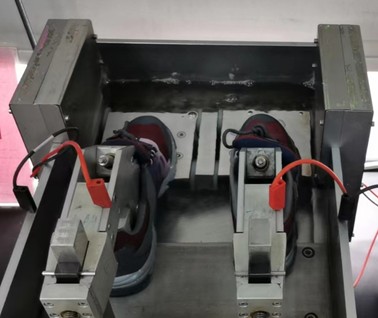
In this method, the finished shoe is mounted on a dynamic waterproof tester, with the forefoot area in contact with water at a set depth. The tester repeatedly flexes the forefoot at a defined angle and frequency to simulate walking motion, until water penetrates the inside of the shoe. The number of flexes or the time elapsed is recorded to evaluate waterproof performance.
|
Parameter
|
GB/T 16641-2019
|
DIN SPEC 53264-2017 6.2
|
SATRA TM 77
|
ISO 20344:2021 5.19
|
|---|---|---|---|---|
|
Angle
|
(45±1)°
|
(5~35)°
|
Shoe-dependent
|
(22±5)°
|
|
Frequency
|
(60~65) flexes/min
|
(35±2) flex/min
|
(140±10) cycles/min
|
(60±6) flexes/min
|
|
Water level
|
≤ 0.01 mg/kg
|
Varies depending on the shoe
|
Varies depending on the shoe
|
Varies depending on the shoe
|
The water tank method is the most widely used approach for dynamic waterproof testing of finished footwear, especially suitable for shoes that require long-lasting waterproof performance in dynamic conditions such as walking or sports.
2. Trough test method
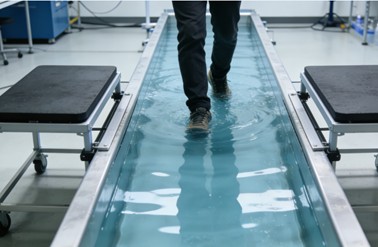
Also known as the trough test, this method is more intuitive: a tester wears the sample shoes and walks in a water trough at a specified depth and pace. After completing the walk, the shoes are checked for water ingress.
|
Parameter
|
EN 13073
|
ISO 20344:2021 5.19
|
|---|---|---|
|
Walking speed
|
Slower than normal, but preferably no less than 1 step/second
|
Slower than normal, but preferably no less than 1 step/second
|
|
Walking distance
|
10 steps × 100
|
10 steps × 100
|
|
Water depth
|
25mm or 5mm above sole-upper joint
|
(30±3)mm
|
This method is suitable for waterproof footwear that cannot be tested using the water tank method. It also more closely simulates real wear scenarios and effectively evaluates waterproof performance under actual use conditions.
3. Spray test method
In this test, the shoe is mounted on a dynamic tester and placed in a water-filled (or dry) tank. The upper is continuously wetted, while the shoe is flexed at a frequency of (35±2) flexes/min. The shoe is then observed for signs of water penetration.
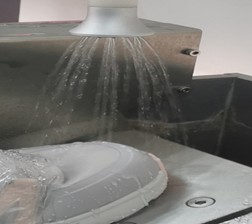
This method focuses on assessing the waterproof performance of the upper and is typically used for footwear that cannot be evaluated by immersion methods, or for shoes with special structural designs or intended uses.
Each of the three methods has its own focus. The water tank method emphasizes the overall structural resistance to water penetration under flexing; the walking method prioritizes real-wear simulation; and the spray method concentrates on localized upper waterproofing. Depending on product positioning, target market standards, and customer requirements, engineers can select a single method or a combination to ensure that products meet both industry specifications and actual use conditions.
PFI Fareast – Footwear Waterproof Performance Services
- Comprehensive testing capabilities: PFI Fareast’s laboratory is fully equipped to conduct waterproof performance testing in accordance with multiple international and national standards.
- Technical diagnostics & failure analysis: Our technical experts can precisely identify weak points in product waterproofing and provide end-to-end improvement solutions – from material selection to process optimization. We go beyond testing to identify root causes and deliver fundamental solutions.
Contact us to discuss your needs.